
A receiver looks at a pallet of torn cartons and refuses the load. The driver is now stuck at the dock with freight that has to move somewhere, today, without turning into a bigger claim.
Pallet rework is the hands-on process of fixing freight that arrived damaged, got rejected, or shifted loose in transit, by sorting it, rebuilding it onto sound pallets and securing it again for delivery. It covers more ground than restacking alone. It can mean swapping a broken pallet, pulling out ruined cases, relabeling mixed stock, or moving the load to another trailer. Knowing which situation applies tells you what kind of crew and equipment the job actually needs.
Key Takeaways
- Pallet rework fixes freight that is damaged, rejected or shifted loose, not just leaning pallets.
- Re-palletizing moves good freight off a broken pallet onto a sound one before anything else happens.
- Rejected loads need the receiver’s reason in writing before rework starts, since that decides what gets fixed.
- Loose or floor-loaded freight gets sorted, built onto pallets and wrapped as part of the same job.
- A rework is only finished when the trailer is reloaded, secured and documented.
What Pallet Rework Actually Covers
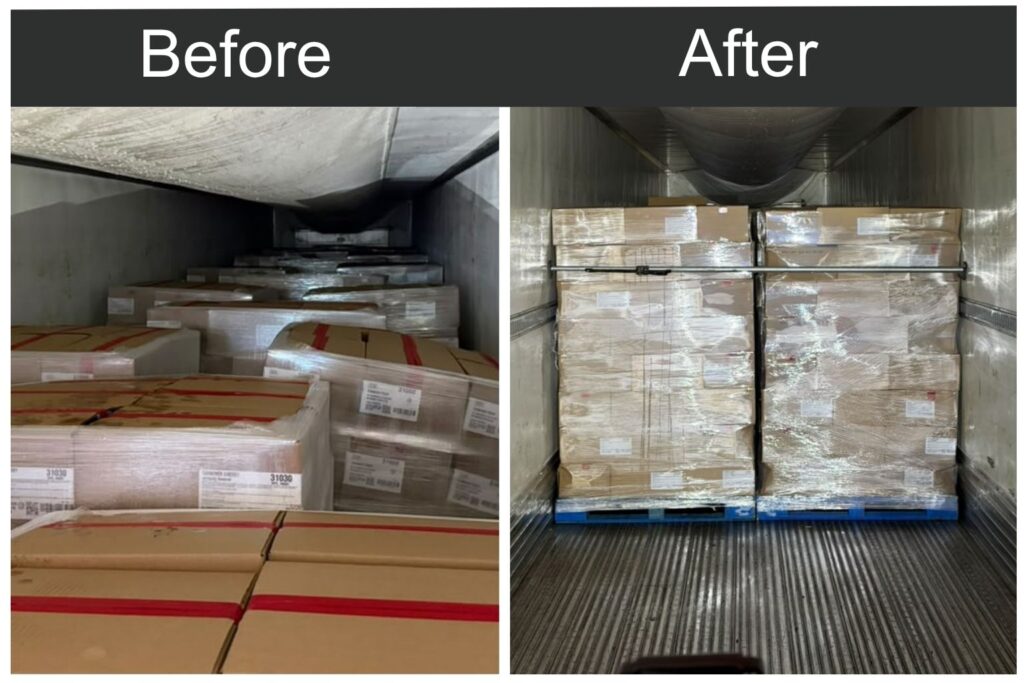
Pallet rework is the broader fix for freight that cannot be delivered as it sits, whether the problem is a damaged pallet, cases a receiver rejected, or product that was never palletized at all. It includes restacking, re-palletizing, rewrapping, relabeling and rebalancing axle weight, done in whatever combination the load needs.
The word gets used loosely, so it helps to separate what each term actually means before a crew shows up.
Term | What it means | When it applies |
Pallet rework | The overall fix: sorting, rebuilding, re-securing, sometimes relabeling | Damaged, rejected or loose freight |
Restacking | Rebuilding cases back onto the same pallet | Leaning or toppled stack, pallet still sound |
Re-palletizing | Moving freight onto a new pallet | Broken deck boards, cracked stringers |
Moving freight to a different trailer or container | Damaged trailer, or damage too extensive to fix in place |
A single trailer can need more than one of these at once. A tail section might need restacking while a nose pallet with a broken base needs re-palletizing.
The Three Situations That Call for Rework
Freight usually needs rework for one of three reasons: it arrived physically damaged, a receiver refused to accept it, or it was never properly palletized to begin with. Each situation changes what the crew does first and who has to sign off before work starts.
Damaged freight
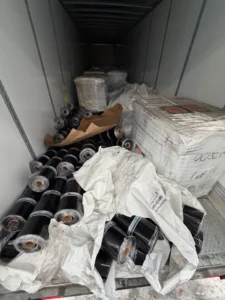
Damage ranges from a few crushed cartons to a pallet that has fully collapsed. The crew separates anything torn, crushed, wet or leaking from sound stock, documents the damaged count, and rebuilds the rest onto a pallet that can actually carry it.
Damage severity decides how much of the load gets touched. A handful of crushed corner cases on an otherwise sound stack might only need those cases pulled and the rest re-wrapped, while a pallet that collapsed under its own weight usually means every case comes off and gets inspected before anything goes back together.
Hypothetical example. A pallet of boxed goods arrives with its bottom two layers crushed from being double-stacked under a heavier load. The top three layers are untouched, so those cases get rebuilt onto a fresh pallet while the crushed cartons are counted, photographed and set aside for the claim.
Rejected freight
A receiver can refuse a load for damage, a mismatched order, missing paperwork or a load that does not meet their dock standards. Before anything is touched, get the rejection reason in writing and confirm whether the receiver will accept the freight once it is reworked, since some rejections are final no matter what gets fixed.
Loose or floor-loaded freight
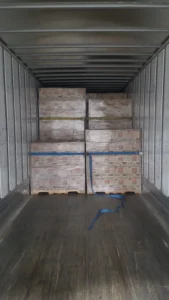
Floor-loaded trailers carry cartons or bags stacked directly on the floor with no pallets underneath. When that freight shifts, slides into a pile, or simply needs to move onto pallets for the next leg, the crew builds pallets from scratch: sorting by SKU, stacking to spec, and wrapping each one before it is reloaded.
Floor-loaded freight is often the slowest rework job, since there is no existing structure to rebuild from. Every case has to be checked, matched to its SKU and stacked in the right pattern, which takes longer than restacking a pallet that only shifted a few inches.
How Re-Palletizing Works, Step by Step
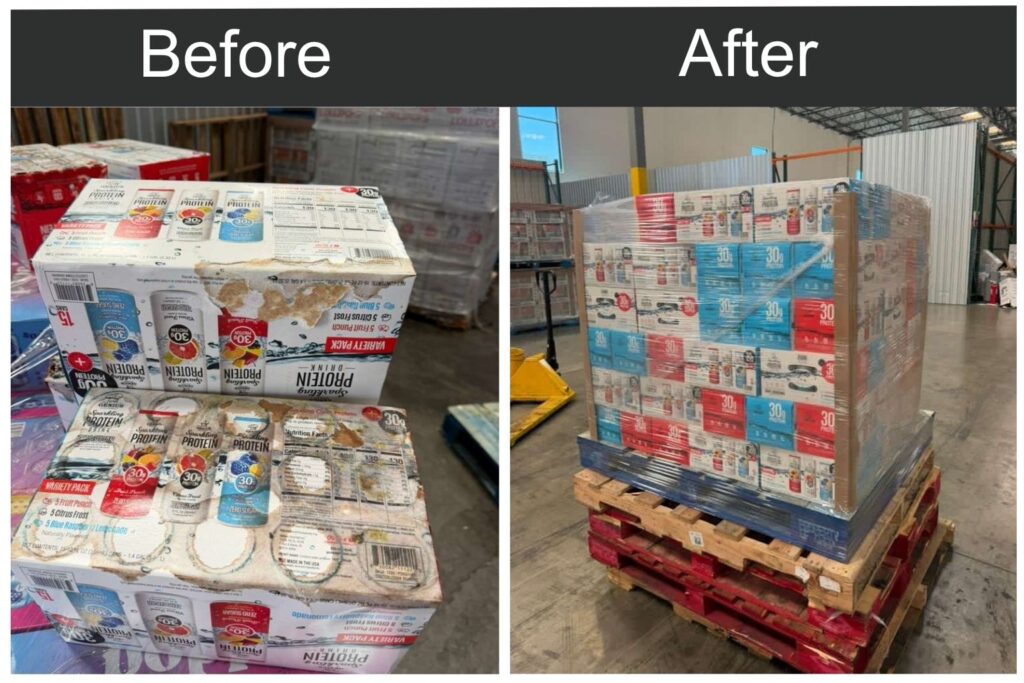
Re-palletizing moves freight off a pallet that can no longer carry it safely onto a new one, rebuilding the stack in the process. It differs from a simple restack because the base itself is being replaced, not just the cases on top of it.
1. Photograph and sort first
Document the load and the damaged pallet before anything moves. Then sort cases into sound stock, damaged stock and anything that needs separate handling, such as items with torn packaging or missing labels.
2. Stage a sound pallet
Bring in a pallet rated for the load’s weight, with no broken deck boards, cracked stringers or protruding nails. A pallet that looks fine but can’t bear the weight just creates the next rework job.
3. Rebuild the stack to spec
Load the heaviest cases first, keep every case inside the pallet’s edges, and follow the column or interlocking pattern the product’s packaging calls for. Mixed SKUs get kept in clearly marked sections so the receiver or warehouse can sort them later.
4. Relabel where needed
If the original pallet label was damaged, lost, or no longer matches what is actually on the rebuilt pallet, it gets replaced. A wrong label on a rebuilt pallet causes problems long after the trailer leaves.
5. Wrap, secure and reload
Anchor the stretch wrap to the pallet base with several turns before working upward, add corner boards to tall or heavy stacks, and load the trailer so the rebuilt pallets sit tight with no gaps to slide into. Federal cargo securement rules require that freight be firmly immobilized using structures of adequate strength, dunnage, shoring bars, tiedowns or some combination of these, and the system has to withstand 0.8 g of forward deceleration along with 0.5 g sideways and in reverse.
6. Check weight and release
Confirm the reloaded trailer is weight-balanced across its axles, then get a signed condition report with before and after photos before the load moves again.
Rework Decisions at a Glance
Not every damaged pallet needs the same fix. This comparison helps match the job to the right approach before a crew is dispatched, and it also helps when describing the problem over the phone so the right equipment comes out the first time.
Condition | Best approach | What to avoid |
Sound pallet, leaning cases | Restack in place | Re-palletizing a pallet that was never the problem |
Broken deck board, sound cases | Re-palletize onto new pallet | Restacking cases onto a base that will fail again |
Receiver rejected the load | Get written reason first, then rework | Starting rework before approval is confirmed |
Floor-loaded freight shifted | Build pallets from scratch | Trying to re-stack floor-loaded cartons without pallets |
Damaged trailer floor or walls | Transload to a different trailer | Reworking pallets inside a trailer that isn’t safe to load |
Frequently Asked Questions
Is pallet rework the same thing as restacking?
No. Restacking rebuilds cases on a pallet that is still structurally sound. Pallet rework is the broader term, covering restacking along with re-palletizing, relabeling, rewrapping and weight rebalancing, whatever combination a damaged or rejected load needs.
What happens to freight a receiver rejects?
Get the rejection reason in writing before anything is touched, since not every rejection can be fixed by rework. If the receiver confirms they will accept a reworked load, the crew documents the damage, rebuilds the pallets and secures the load before it moves again.
Can floor-loaded freight be turned into palletized freight?
Yes. Loose cartons or bags get sorted by SKU, built onto sound pallets following the right stacking pattern, then wrapped and secured like any other pallet. This is common when floor-loaded freight needs to move onto pallets for the next leg of its trip.
Do reworked pallets need new labels?
Only when the original label is missing, damaged, or no longer matches what is on the rebuilt pallet. A rebuilt pallet with the wrong label creates confusion for whoever unloads or scans it next, so relabeling is part of the job whenever that mismatch exists.
Who decides if a pallet needs re-palletizing instead of restacking?
The crew checks the pallet itself. Split deck boards, cracked stringers or protruding nails mean the base cannot safely carry the load again, so the freight moves to a new pallet. A sound base with shifted cases just needs restacking.
Conclusion
Pallet rework covers more than one kind of problem: damaged freight, rejected loads and cartons that were never palletized at all. The right fix depends on whether the pallet itself is sound, what the receiver will accept, and how the freight was loaded to begin with. Documenting the load before, during and after the work is what keeps everyone protected once the trailer leaves.
If freight at a Fontana or Inland Empire dock needs sorting, rebuilding or re-palletizing, Freight Restacking Rework sends its own crews on-site with a photo-documented condition report on every job. Call dispatch at (840) 217-1924, any time of day.