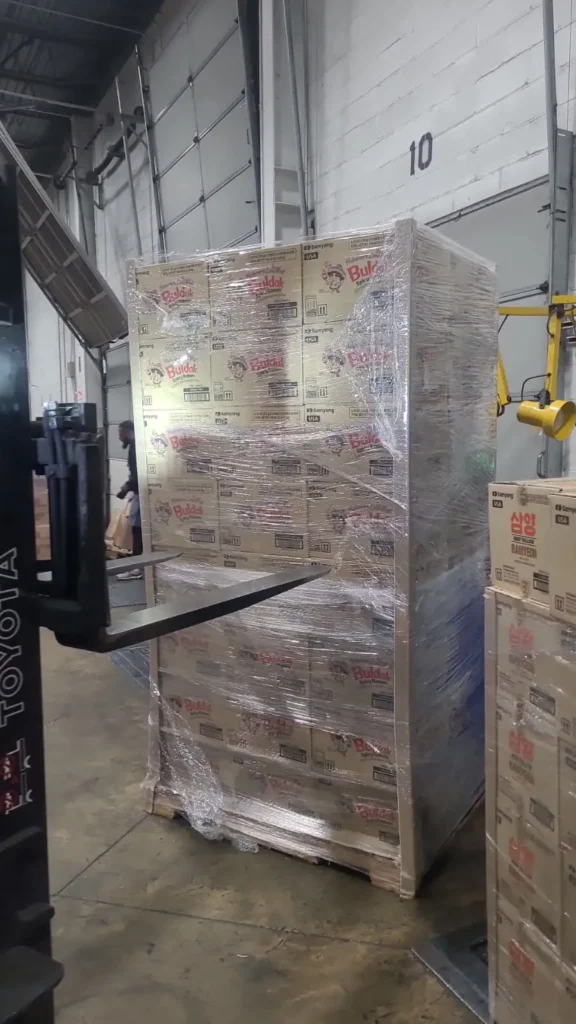
Transloading and crossdocking both move freight through a dock without putting it into long-term storage, so they are easy to mix up. They solve different problems, though, and picking the right one saves time and handling.
The short answer
Transloading is moving freight from one trailer or container to another, usually to change equipment or route, with each pallet checked, reworked if needed and secured for the next leg.
Crossdocking is receiving inbound freight and moving it straight to outbound trailers, sorted by destination, without putting it into long-term storage.
Transloading explained
Transloading is about the equipment. The freight is staying together, or mostly together, but it needs to be on a different trailer or out of a container.
When transloading makes sense
- Freight arrives in a container and has to continue in a dry van or reefer.
- A trailer is damaged or unavailable and the load needs a new one.
- The route changes and the load needs equipment that suits the next leg.
What good transloading looks like
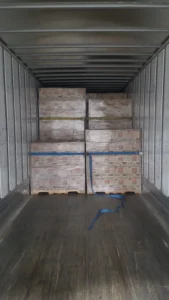
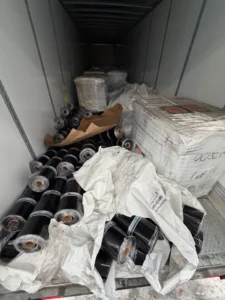
Transfers are where loads get damaged, so each pallet should be inspected and photographed as it comes off, leaning or crushed pallets rebuilt before they are loaded, and the outbound trailer weight-balanced, strapped and documented before it is released.
Crossdocking explained
Crossdocking is about sorting. Inbound freight is split, combined or redirected by destination and goes straight onto outbound trailers.
When crossdocking makes sense
- One inbound load has to be split across several destinations.
- Freight from several inbound trailers is being combined into fuller outbound loads.
- Freight needs to keep moving with as little dwell time as possible.
What good crossdocking looks like
Inbound trailers are unloaded and checked, freight is staged by outbound trailer, and anything that arrived in bad shape is restacked or re-palletized on the dock instead of holding up the outbound load.
Side by side
| Transloading | Crossdocking | |
|---|---|---|
| What changes | The trailer or container the freight travels in | The destination groups the freight is sorted into |
| Typical trigger | Container to trailer, damaged trailer, change of equipment | Splitting or combining loads by destination |
| Storage | None, or only until the next trailer is ready | None: inbound to outbound |
| Where rework fits | Damaged pallets rebuilt before reloading | Damaged pallets fixed on the dock during the sort |
What if the freight needs to wait?
If freight has to sit for a few days, for example after a missed receiving appointment or while a carrier is on the way, that is short term storage rather than transloading or crossdocking.
Transloading and crossdocking in Fontana
Our docks are at 11179 Banana Ave, Dock 8-10, in Fontana, with our own crews doing the transfers, sorting and rework. See Transloading, Crossdocking, Transloading in Fontana, CA and Crossdocking in Fontana, CA, or call dispatch at (840) 217-1924.
Quick answers
Is transloading the same as crossdocking?
No. Transloading moves freight onto different equipment; crossdocking sorts inbound freight straight onto outbound trailers by destination.
Can damaged freight be crossdocked?
Yes, if it is fixed first. Shifted or damaged pallets can be restacked or re-palletized on the dock before they are loaded outbound.
Does transloading have to happen at a warehouse?
It can happen at a dock, such as ours in Fontana, or on-site at your yard when that makes more sense. Call dispatch and we will tell you which fits your load.