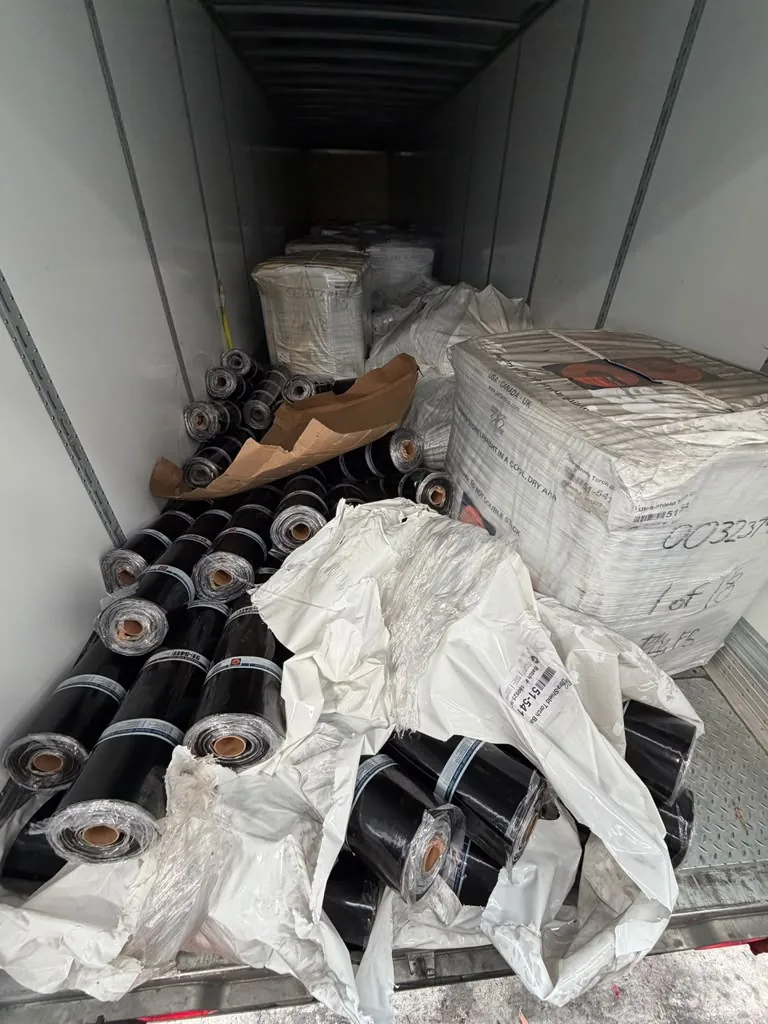
A trailer that arrives with leaning stacks or collapsed pallets is a delay, but it does not have to become a rejected delivery. What happens in the first hour decides that: how the doors are opened, what gets recorded, who is told, and how the load is rebuilt. Here is the order that keeps freight safe and the paperwork clean.
Why freight shifts in transit
Most shifted loads come down to a few causes, often together:
- Hard braking, sharp turns or rough road surfaces moving freight that had room to move.
- Pallets built too tall, with cases hanging over the pallet edge, or with heavy cases on top of light ones.
- Weak or damaged pallets that give way under the load.
- Stretch wrap that holds the boxes together but is not anchored to the pallet itself.
- Gaps left in the trailer with no load bars, straps or dunnage to stop pallets sliding.
What to do when a load has shifted, step by step
1. Open the doors carefully
Shifted freight is often leaning against the doors. Open one door a little first, look inside, and stand clear before swinging both doors open. A falling pallet is a far bigger problem than a leaning one.
2. Photograph everything before anything moves
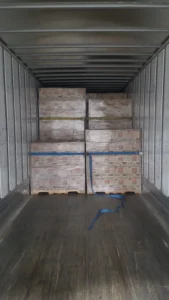
Take photos of the seal and seal number, the load as seen from the doors, damaged cartons and the pallet labels, plus the bill of lading. These pictures are what the shipper, broker, receiver and any claim will rely on later. If the trailer is sealed, check your agreement before the seal is broken.
3. Tell the shipper, broker and receiver
Let them know before the load is touched. Ask who authorizes the rework and whether the receiver will accept the freight once it is rebuilt. Settling that first avoids disputes over who approved what.
4. Decide where the rework happens
Many shifted loads can be restacked inside the trailer. If pallets are broken, freight is badly damaged, or the load has to move to another trailer, it is safer to rework it at a dock.
5. Rebuild, rewrap, re-secure and rebalance
A proper rework is more than pushing boxes back into place:
- Restack the cases to spec, heaviest at the bottom, nothing hanging over the edge.
- Move freight off broken pallets onto sound ones.
- Rewrap so the stretch wrap is anchored to the pallet, not just the top layers.
- Fill gaps and secure the load with load bars or straps.
- Check the axle weights so the rebuilt load is back within legal limits.
6. Get a condition report before the trailer leaves
Before-and-after photos and a signed condition report give everyone the same record of what arrived, what was done and what left. Ask for one on every rework.
What to have ready when you call a rework crew
- Where the trailer is: the yard, street address or dock door.
- The trailer type: dry van, reefer or flatbed.
- What shifted, and roughly how many pallets are affected.
- Whether the trailer is sealed.
- The delivery appointment time you are trying to make.
Getting a crew in Fontana and the Inland Empire
Freight Restacking Rework runs its own crews out of Fontana. In Fontana, most calls get a crew on-site within about an hour of dispatch; for other areas, call and we will give you an ETA before a crew is sent. See Pallet Rework and Restack, Pallet Rework and Restack in Fontana, CA and all the areas we serve, or call dispatch at (840) 217-1924, 24/7.
Quick answers
Can shifted freight be fixed without unloading the trailer?
Often, yes. Many loads can be restacked and re-secured inside the trailer. If pallets are broken or the freight has to move to another trailer, the work is done at a dock instead.
Who pays for freight rework?
That depends on the agreements between the carrier, shipper and broker, so confirm it before the work starts. We quote up front, and you approve the rework before we begin.
Do I really need photos before the rework?
Yes. Photos taken before anything moves are the clearest record of the load’s condition on arrival, and they protect everyone involved.